What a Commercial Interior Design Contractor Actually Does (And Why It Matters)
A commercial interior design contractor is a professional — or firm — that plans, designs, and builds out interior spaces for businesses, from offices and retail stores to restaurants and healthcare facilities.
Here's a quick breakdown of what they do and why businesses hire them:
What They Do | Why It Matters |
|---|---|
Plan functional layouts and traffic flow | Maximizes productivity and customer experience |
Select materials, finishes, and furnishings | Balances durability, aesthetics, and budget |
Ensure building code and ADA compliance | Avoids legal risk and costly rework |
Coordinate architects, contractors, and vendors | Keeps projects on time and on budget |
Integrate branding into physical space | Reinforces company identity and customer trust |
Most business owners think of interior design as making a space look good. But the best commercial interior design contractors focus first on making a space work well — and the aesthetics follow from that.
The difference between a thriving workspace and a dysfunctional one often comes down to decisions made before a single wall goes up: How does foot traffic flow? Where do employees focus vs. collaborate? Does the space reflect the brand?
These are the questions that separate good contractors from great ones.
At Monumental Contractors, we've seen how the right habits — applied consistently across projects in Maryland, Virginia, and DC — determine whether a commercial interior transformation delivers real business results or just a fresh coat of paint.
Below, we break down the 5 habits that define highly successful commercial interior design contractors, so you know exactly what to look for — and what to expect.
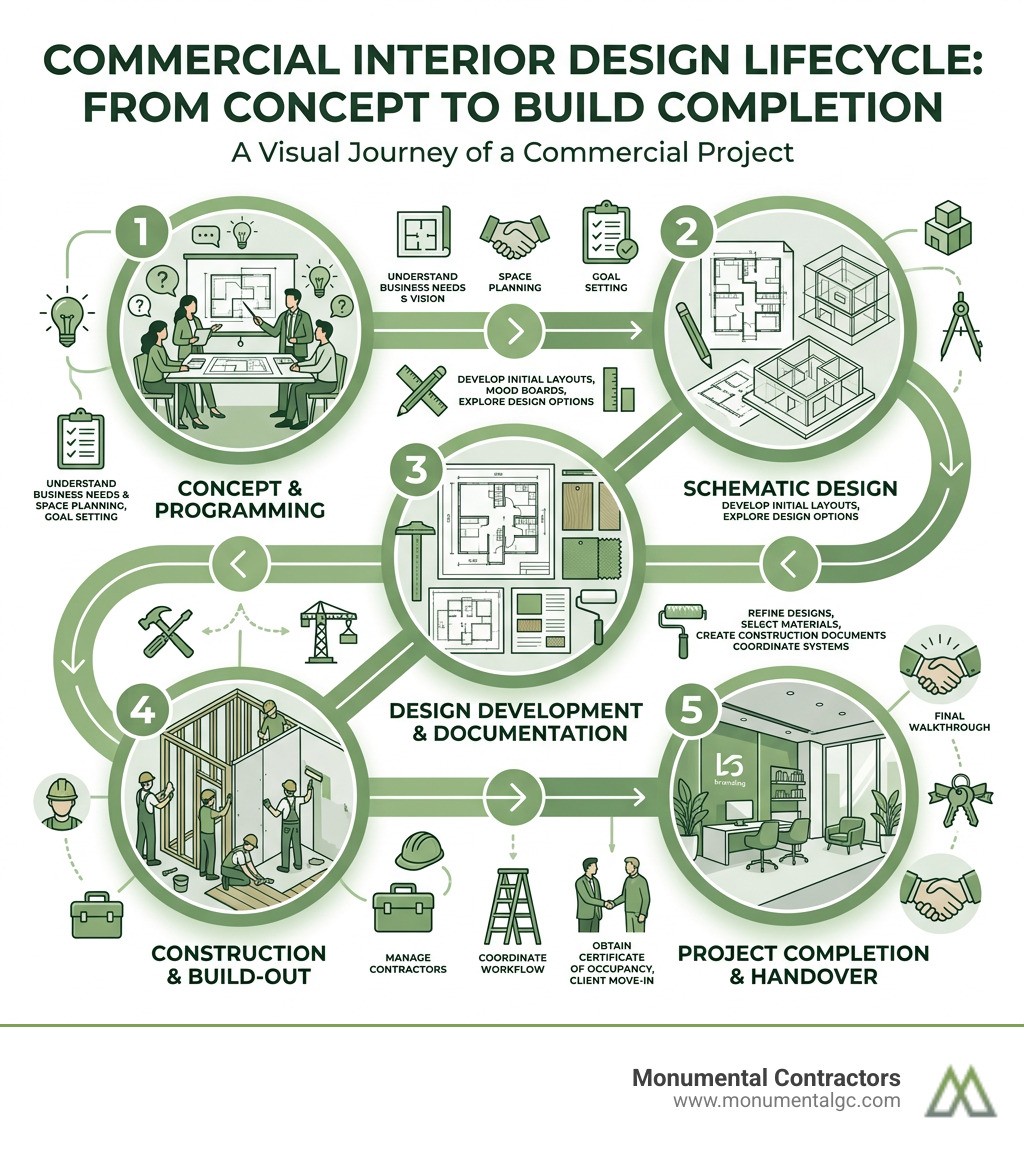
Habit 1: Prioritizing Functional Space Planning over Aesthetics
While a beautiful office or a sleek retail storefront is the goal, a successful commercial interior design contractor knows that aesthetics are secondary to function. In a commercial setting, "pretty" doesn't pay the bills—efficiency does.
Space planning is the heartbeat of any commercial project. It involves analyzing how people move through a space, how they interact with one another, and how the physical environment supports the business's daily operations. Whether it's a restaurant where servers need a clear path from the kitchen to the tables or a retail store designed to lead customers naturally toward the checkout, functional layout is the priority.
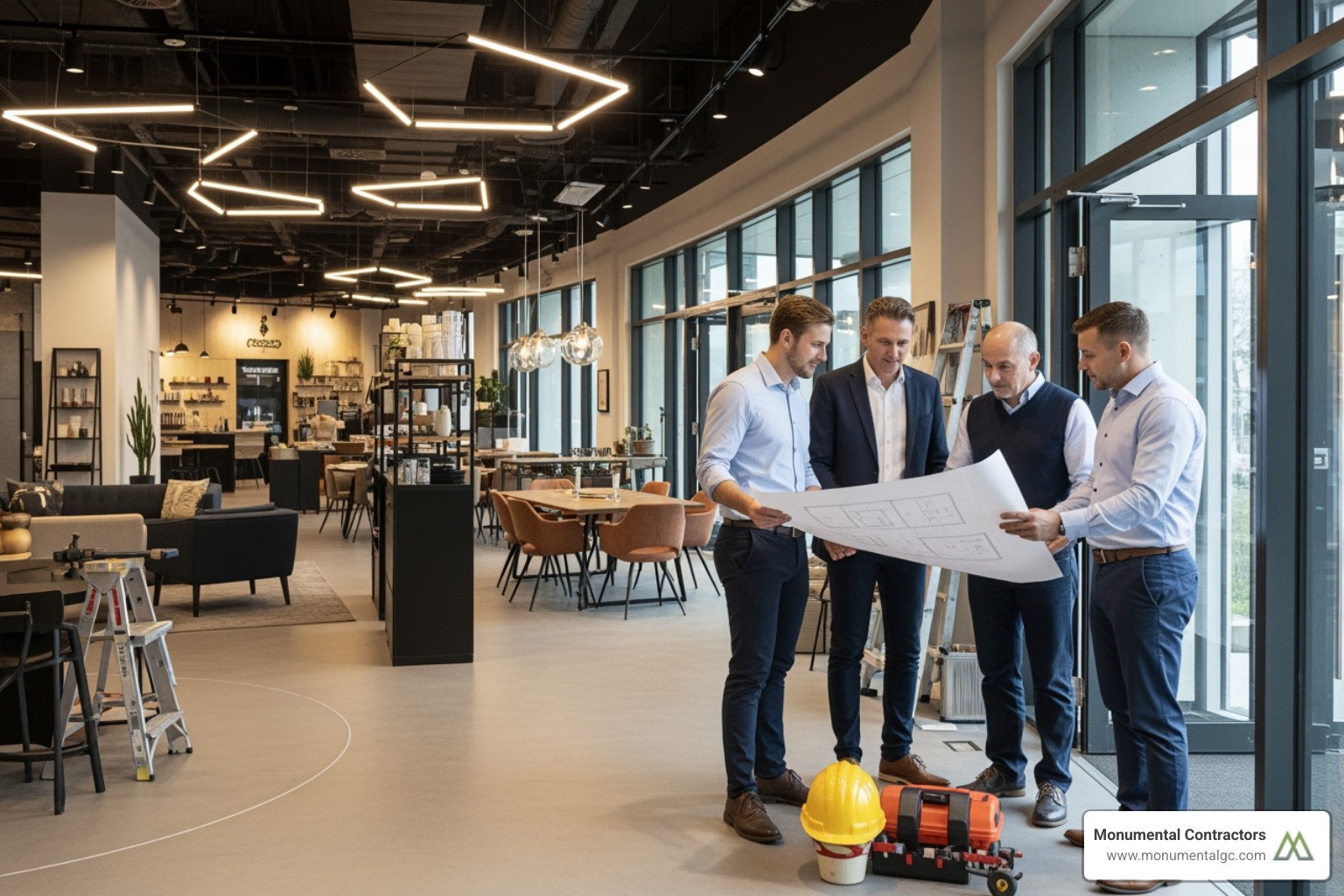
Why Hire a Commercial Interior Design Contractor for Office Layouts?
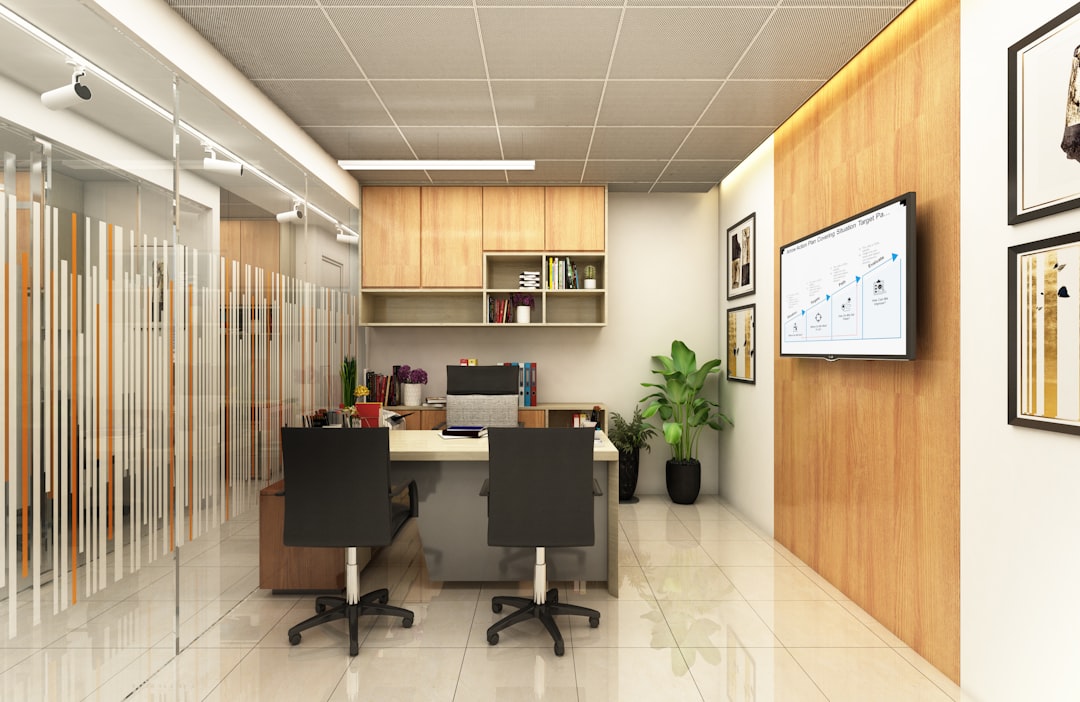
In the modern workplace, the "one-size-fits-all" cubicle farm is dead. Successful contractors use data-driven design—sometimes even utilizing employee surveys or utilization studies—to determine what a team actually needs. This might include:
Quiet Pods: For deep, focused work.
Collaboration Zones: Open areas designed for brainstorming and team interaction.
Workflow Optimization: Placing departments that frequently collaborate near each other to reduce "travel time" across the office.
When we handle office build-outs, we focus on boosting employee performance by creating a "workscape" that balances privacy with community.
Differentiating Commercial from Residential Design
It is a common misconception that interior design is the same regardless of the building type. In reality, commercial and residential designs have vastly different goals. Residential design is about personal comfort and individual style. Commercial design, however, is about profit maximization, multi-user needs, and public safety.
Feature | Residential Design | Commercial Design |
|---|---|---|
Primary Goal | Personal comfort & style | Business performance & ROI |
User Base | Single family/Individual | Employees, customers, public |
Durability | Standard wear and tear | High-traffic, heavy-duty materials |
Compliance | Standard residential codes | Strict fire, ADA, and occupancy codes |
Branding | Personal expression | Visual identity and brand reinforcement |
Habit 2: Ensuring Strict Regulatory and Code Compliance
One of the most critical habits of a top-tier commercial interior design contractor is an obsession with the "boring" stuff: building codes and regulations. A beautiful design is worthless if it fails a fire inspection or doesn't meet accessibility standards.
Professional contractors stay updated on local and national building regulations. This includes everything from fire-rated materials and emergency exit placement to ADA (Americans with Disabilities Act) upgrades. Ensuring that a space is accessible to everyone isn't just a legal requirement; it's a hallmark of inclusive, high-quality design.
Navigating Maryland, Virginia, and DC Regulations
Operating in the DMV area (DC, Maryland, and Virginia) requires specific expertise. Each jurisdiction has its own quirks. For example, a project in Washington, DC, might involve navigating complex historic renovation rules or strict zoning laws that don't apply in Frederick, MD, or McLean, VA.
We take pride in our ability to manage the permitting process and construction administration, ensuring that every structural change - from HVAC integration to partition walls - meets the specific safety and legal standards of the local municipality.
The Importance of Professional Certification
Why does certification matter? Organizations like the International Interior Design Association (IIDA) or national equivalents ensure that a designer has the technical proficiency to handle complex projects. This expertise mitigates liability for the business owner and ensures that the structural integrity of the building is never compromised for the sake of a "look."
Habit 3: The Role of a Commercial Interior Design Contractor in Branding
A successful commercial space should tell a story. When a customer walks into a boutique or a client enters a law office, they should immediately feel the brand's essence. This is where a commercial interior design contractor acts as a strategic marketing partner.
Through color psychology, material selection, and lighting, a contractor can influence customer behavior. For instance, certain colors can encourage longer stays in a restaurant, while others might promote a sense of urgency or high energy in a fitness center.
Incorporating Brand Essence into Physical Space
Branding is more than just sticking a logo on the wall. It's about:
Custom Finishes: Using materials that reflect company values (e.g., reclaimed wood for a sustainable brand).
Visual Identity: Aligning the interior color palette with the company's marketing materials.
Storytelling Environments: Creating an "experiential space" that leaves a lasting impression on clients and recruits.
Selecting the Right Commercial Interior Design Contractor for Your Industry
Different industries require different "habits." A contractor specializing in healthcare environments must prioritize sanitation and patient calm, while one working on a tech startup needs to focus on flexibility and high-speed tech integration. At Monumental Contractors, our experience across sectors - from retail and restaurants to government solutions - allows us to tailor the functionality to the specific industry standards.
Habit 4: Leveraging the Design-Build Model for Efficiency
The traditional approach to commercial renovations involves hiring an architect, then an interior designer, then a general contractor. This often leads to "handoff" errors, finger-pointing, and budget overruns. Highly successful contractors have moved toward the design-build model.
By acting as a single-source of responsibility, a design-build firm streamlines the entire process. This model ensures that the person designing the space is in constant communication with the person building it.
Streamlining Timelines and Reducing Handoffs
The design-build approach typically includes:
Pre-design Assessment: Evaluating the site and brand requirements.
Schematic Design: Creating 3D renders so you can "walk through" the space before construction begins.
Construction Oversight: Daily collaboration to ensure the build matches the vision.
This leads to faster delivery and fewer surprises. Instead of waiting weeks for an architect to approve a field change, the decision happens in real-time on-site.
Managing Budgets and Manufacturer Relationships
A seasoned commercial interior design contractor has deep relationships with manufacturers. For example, firms that have been in business for decades, like those we model our practices after, often secure industry-best pricing on furniture and finishes. This allows for "value engineering"—finding ways to achieve a high-end look without breaking the budget. We manage staged procurement to ensure materials arrive exactly when needed, keeping the project on track.
Habit 5: Integrating Wellness and Future-Proof Technology
The final habit of a successful contractor is looking toward the future. Modern commercial interiors are no longer static; they are dynamic ecosystems that must support employee well-being and evolving technology.
Trends Shaping Modern Commercial Interiors
Biophilic Design: Incorporating natural light, indoor plants, and organic materials to reduce stress and boost productivity.
Flexible Workspaces: Using modular furniture and architectural glass walls that can be reconfigured as a company grows.
Sustainability: Selecting eco-friendly materials and energy-efficient lighting to reduce the building's carbon footprint.
Technology Integration for Business Growth
A space that looks great but lacks power outlets or high-speed connectivity is a failure. Successful contractors integrate technology from day one. This includes:
Smart Building Tech: Automated lighting and HVAC systems.
Audio-Visual Systems: For seamless digital collaboration in conference rooms.
Future-Proofing: Installing adaptable infrastructure, like EV charging stations or upgraded electrical panels, to handle tomorrow's needs.
Frequently Asked Questions about Commercial Interior Design
How long does a typical commercial interior design project take?
The timeline varies significantly based on scope. A small tenant improvement or office "refresh" might take 3–5 months. However, a large-scale renovation or new construction involving structural changes and complex permitting in areas like DC or Northern Virginia can take 10–14 months. Client responsiveness during the design phase is often the biggest factor in staying on schedule.
What factors influence the cost of a commercial interior project?
Several variables drive the budget:
Square Footage: Larger spaces naturally cost more, though there are sometimes economies of scale.
Material Quality: High-end custom finishes vs. standard commercial-grade materials.
Structural Changes: Moving plumbing or load-bearing walls adds significant cost.
Technology Needs: Integrated AV and smart systems require specialized labor and hardware.
How does interior design impact employee retention and productivity?
Well-designed spaces are a powerful tool for talent attraction. Employees are more likely to stay with a company that provides a comfortable, ergonomic, and inspiring environment. Research shows that optimized lighting and acoustics can significantly reduce fatigue and improve focus, leading to a direct boost in overall business performance.
Conclusion
Choosing the right commercial interior design contractor is a strategic business decision. It’s about more than just picking paint colors; it’s about finding a partner who understands your workflow, respects your budget, and knows how to navigate the complex regulatory landscape of Maryland, Virginia, and DC.
Successful contractors aren't just builders—they are visionaries and problem solvers. They prioritize function, obsess over compliance, reinforce your brand, and leverage modern models like design-build to deliver results.
Whether you are looking for a full facility contract or specific tenant improvements, Monumental Contractors is here to help you scale your vision. From the initial schematic to the final furniture installation, we manage every phase so you can focus on what you do best: running your business.